



The Company Won Sinopec Science and Technology Progress Award
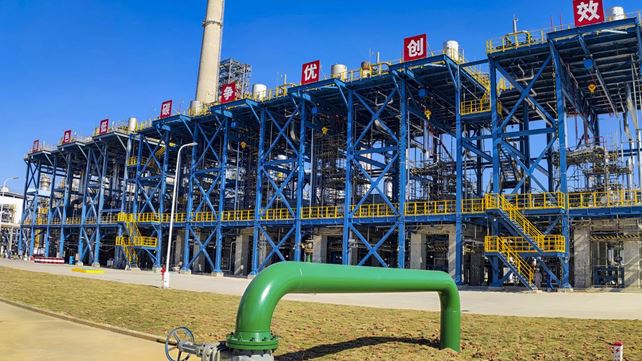
Recently, the Sinopec Science and Technology Innovation Conference was held in Beijing, where a number of high-quality achievements were recognized. Among them, the Project "Development and Application of Aromatics Low-Temperature Heat Efficient Recovery Technology and Key Equipment," co-developed by FREP, was awarded the Second Prize of the Sinopec Science and Technology Progress Award.
Aromatics Complex features a long process flow, numerous circulating materials, and complex separation processes, generating substantial low-temperature heat sources from overhead condensation. However, most of this low-temperature heat is difficult to utilize internally due to its low temperature level. Previously, cooling could only be achieved through air coolers and water coolers, resulting in high energy consumption for Aromatics Complex and making it a major energy consumer for refining and chemical enterprises.
This project addresses the critical challenge of waste heat recovery in Aromatics Complex. Based on existing low-flow, low-pressure steam compressor and high-temperature expander technologies, and research of the technical difficulties faced by low-pressure steam compressors under the case of Aromatics by-product steam, the project is carried out to develop a prototype and subsequently realize process coupling with Aromatics Complex, achieving the energy-saving objective through steam recovery and utilization.
This project was first implemented at FREP. During the TA at the end of 2021, Aromatics Complex underwent bold revamps: related equipment was dismantled and steam generators were added. The generated low-pressure steam is then boosted in pressure and superheated via a screw-type steam compressor system before being fed into the medium-pressure steam pipe network, which significantly upgrades the steam quality, enabling its full utilization and achieving the goal of energy conservation.
According to statistics, FREP Aromatics Low-Temperature Heat Utilization Revamp Project (Phase I) achieves an annual energy saving of 55K tons of standard coal and reduces carbon dioxide emissions by 145.5K tons. (By Liu Mengmeng and Zhang Lei)